
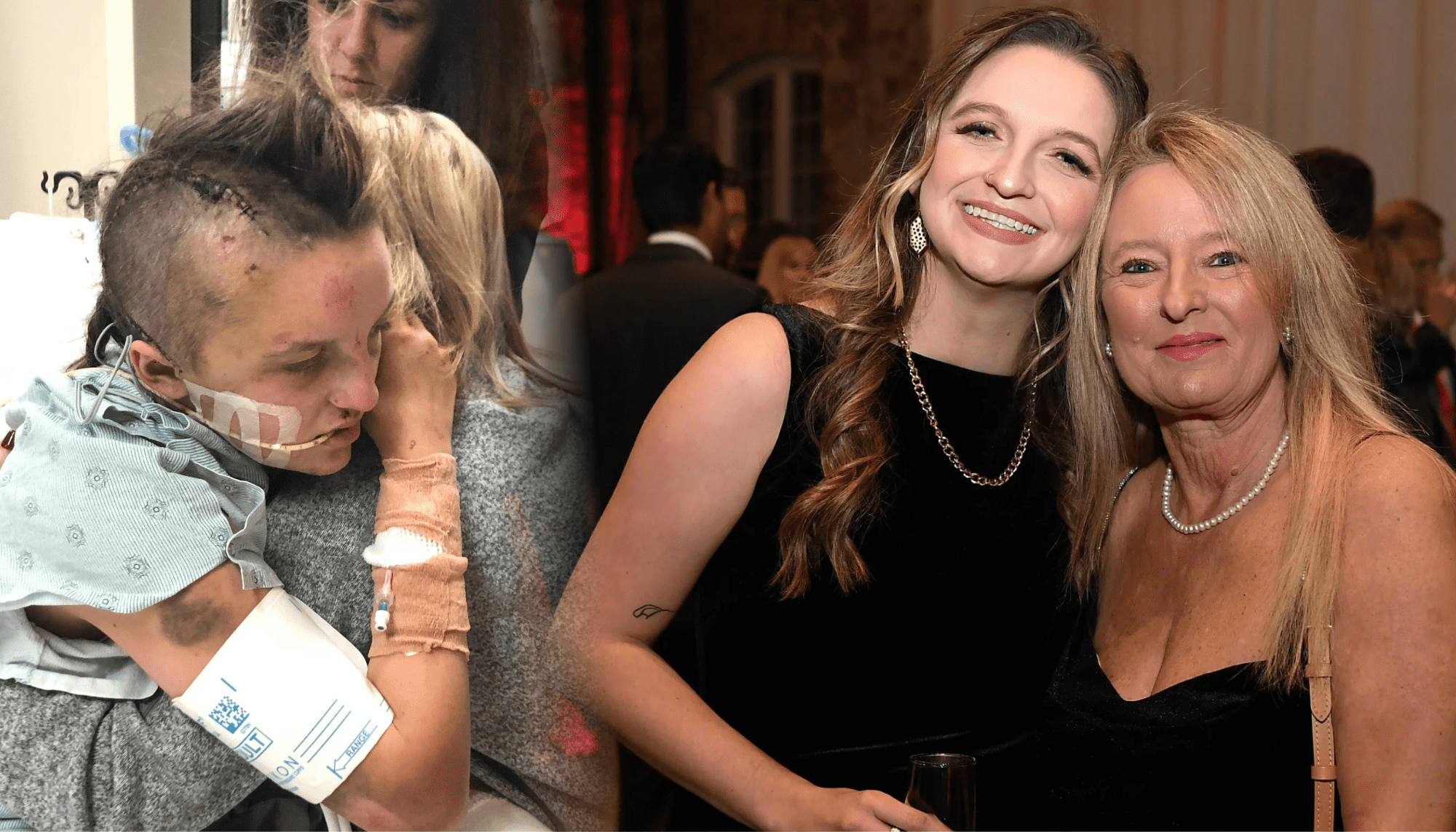
Elizabeth Callaham is known as the “Miracle Girl,” a story defined by being in the right place at the right time. During her recovery, the Ronald McDonald House made that same kind of presence possible for her parents, keeping them by her side when she needed them most.
“I don’t know what we would have done without the Ronald McDonald House and their support to keep my family by my side all the time,” Elizabeth said.
When Elizabeth was airlifted to a hospital an hour from home with life-threatening injuries, her family faced an impossible choice: stay close to her or manage the realities of distance, exhaustion and time. The Ronald McDonald House ensured they didn’t have to choose.
In 2018, Elizabeth went on a horseback ride through her neighborhood on her fairly new horse. Since she was only riding up the road to meet some neighbors, she didn’t worry about putting on a saddle or a helmet — only a purple winter blanket to fight the chill. While riding, she was stopped by a neighbor who complimented the horse and his blanket, striking up a short conversation with Elizabeth before she continued down the road.
Though Elizabeth was not new to the neighborhood, she didn’t know many of her neighbors and rarely interacted with them. As they went their separate ways, her parents entered the neighborhood in their old farm truck. While she was talking to them, the truck made a noise that spooked her horse, who took off running in the opposite direction up the hill.
“By the time they got to the top of the hill, I was at the bottom,” she shared. “He was running, and I was on the road.”
Her parents stopped to help her, but it was beyond their control at that point. Elizabeth was already bleeding out.
Meanwhile, the horse wandered into a neighbor’s yard. The yard belonged to the same neighbor Elizabeth had passed and spoken with for the first time that day. Seeing the horse without a rider, the woman knew something was wrong. An anesthesiologist, she grabbed her medical bag and rushed to find Elizabeth in the neighborhood. Her aid helped stabilize Elizabeth until reinforcements arrived to airlift her to Prisma Health Greenville Memorial Hospital, about an hour from her home.
The hospital’s neurologists, Dr. Aquilla Turk and Dr. Charles Kanos, were at the hospital by chance. One doctor on call and the other, as Elizabeth put it, “at the right place at the right time.”
Both doctors began treating Elizabeth, who at that point had torn her carotid artery in five places after hitting her head on impact. Her brain was swelling from internal bleeding, her elbow was broken, she had a bone flap removed, and she had knocked out several teeth — the worst part for the then 16-year-old.
Unable to stop the bleeding, the doctors pulled her parents aside and told them to prepare for the worst.
Miraculously, when they returned to Elizabeth, they were able to stop the bleeding. When Elizabeth later asked Dr. Kanos, “How did you do that? What did you do to stop the bleeding?” he answered that it was just something they had to do. This moment still baffles Elizabeth and marks the beginning of the recovery that saved her life.
As Elizabeth fought for her life, her parents faced another challenge: how to stay close to her during weeks of critical care an hour from home. That’s when they turned to the Ronald McDonald House.
“We live an hour away, so my parents stayed at the Ronald McDonald House, where they rotated nights,” she said. “Dad would stay the night with me, and Mom would be across the street.”
Elizabeth spent two to three weeks in the ICU, though she doesn’t remember any of it. She was unable to speak, couldn’t move the right side of her body and could only slightly move her eyes.
When she woke, Elizabeth was transferred to the Prisma Health Roger C. Peace Rehabilitation Hospital. There, she had to relearn basic functions like walking, talking, eating and bathing, staying about a month for recovery, much to her dismay.
“I was a 16-year-old brat who didn’t understand the extent of my injuries,” she laughed. “So I was like, I don’t even need to be here.”
However, she shares that the doctors, nurses and proximity of her parents helped to make the stay feel more like home.
Because her parents were able to stay so close, they could help her walk and support her recovery. As they were staying at the House, her parents could take quick breaks from the hospital to shower, get a meal and then return to support Elizabeth in her recovery.
“If it wasn’t for RMHC, I don’t know what would have happened, because there’s no way they could have stayed at the hospital 24/7,” she shared. “And if I didn’t have them there for their support — I don’t know — it was so key to my success, having them by my side the whole time. The moral support and physical support, too.”
Once she was walking, talking and alert, Elizabeth was scheduled for surgery to install a prosthetic bone flap. This recovery included about a month of outpatient therapy before she was cleared to drive and resume normal life. The only lasting change was a warning from Dr. Kanos.
“He said, ‘You can ride horses again, but you have to have a helmet on,’” Elizabeth laughed. “‘I feel like you learned your lesson.’”
“They call me The Miracle Girl,” she said. “Even Dr. Kanos says, ‘I can’t tell you why you’re walking and talking,’ and some of my nurses have said, ‘We honestly thought you were going to be in a retirement home, even at such a young age. We didn’t think you were going to recover.’”
However, because of her young age, resilience, an incredible team and keeping her support nearby her body was able to bounce back.
“I wouldn’t have recovered without all these people and all the support,” she shared.
Elizabeth reflects on the relationships she built through this experience and remains amazed by how everything fell into place with the right people at the right time.
She still stays connected with the Ronald McDonald House, as well as her nurses, doctors and the first responders who helped save her life. Not only does she remember everyone’s name, but she also maintains regular communication with them, checking in on their families and lives.
“They get bad calls like this all the time,” she said. “They don’t always have such a positive outcome.”
This perspective drives Elizabeth to stay connected to those who helped her and to give back. Today, she works with first responders, measuring police officers and EMS personnel for their uniforms—even working with some from her accident. She notes that even though uniforms are a “small thing,” she wants to do anything she can to give back to those who helped save her.
Today, Elizabeth also gives back to RMHC, the place she credits with keeping her family together during the hardest time of her life, and ultimately helping make her recovery possible.
Being in the right place at the right time was crucial to Elizabeth’s recovery from neighbors to doctors to her parents being a few minutes away at any given time. Having her parents by her side wasn’t just comforting, it was critical to her recovery. And that was only possible because of RMHC.
Written by Kylie Tutterow